Unpredictable Payouts: Bookmaker Variations in Odds for Own Goals, Unseated Jockeys, Tennis Retirements, and Basketball Ejections
9 Apr 2026
Unpredictable Payouts: Bookmaker Variations in Odds for Own Goals, Unseated Jockeys, Tennis Retirements, and Basketball Ejections

Navigating the Chaos of Fluke Bets
Fluke events shape betting markets in ways few punters anticipate, yet these rare occurrences like own goals in soccer, unseated jockeys in horse racing, tennis retirements during matches, adn basketball ejections from games reveal stark disparities among bookmakers; data from recent seasons shows odds can swing by 30% or more across major operators, turning overlooked markets into potential value hunts for those who compare diligently. Observers note how such unpredictability draws sharp attention especially now, as April 2026 brings packed schedules from Premier League clashes to Cheltenham Festival aftershocks, ATP clay swings, and NBA playoff tensions where tempers flare and mistakes multiply. What's interesting is that while core match odds tighten through algorithms and trading desks, these peripheral props often lag, exposing bookmaker-specific pricing quirks rooted in historical data interpretations and risk appetites.
Take the broader landscape: figures from the American Gaming Association indicate that low-probability events comprise up to 15% of total betting volume in major sports, yet pricing inconsistencies persist because not all bookies model freak outcomes with equal vigor; some lean conservative on historical frequencies, others chase liquidity by inflating payouts to lure niche bettors. And here's the thing, punters who track these gaps routinely uncover edges, particularly when live odds shift post-event in ways that favor early comparers.
Soccer Own Goals: When Defenders Turn Scorer
Own goals strike terror into defenses and delight contrarian bettors, occurring in roughly 1 in every 12 Premier League matches according to Opta data aggregated over the 2024-2025 campaigns; bookmakers diverge sharply here, with operators like Paddy Power listing anytime own goal odds at 10/1 for high-stakes April 2026 derbies, while William Hill counters at 14/1, a gap that translates to significant value over thousands of wagers. Researchers who've dissected these markets discover that such variances stem from differing algorithms—one study from a European Gaming and Betting Association report highlights how continental bookies factor in set-piece frequencies more aggressively than UK counterparts, leading to tighter pricing on teams like Manchester City known for corner dominance.
But consider this case: during a chaotic April 2026 relegation scrap between Everton and Nottingham Forest, Ladbrokes offered 9/1 on an own goal before kickoff, only for Betfair Exchange to drift to 12/1 as liquidity built, allowing savvy layers to exploit the mismatch; experts observe these patterns repeat because own goals cluster unpredictably, with 28% happening in the final 20 minutes per recent seasons, prompting some bookies to hedge live but others to hold firm. People often find that combining own goal props into accumulators amplifies the edge, especially when cross-referencing with corner totals where disparities compound.
Now, unseated jockeys bring similar drama to the turf, but with even wilder odds swings.
Horse Racing's Unseated Jockeys: Falls That Flip Fortunes
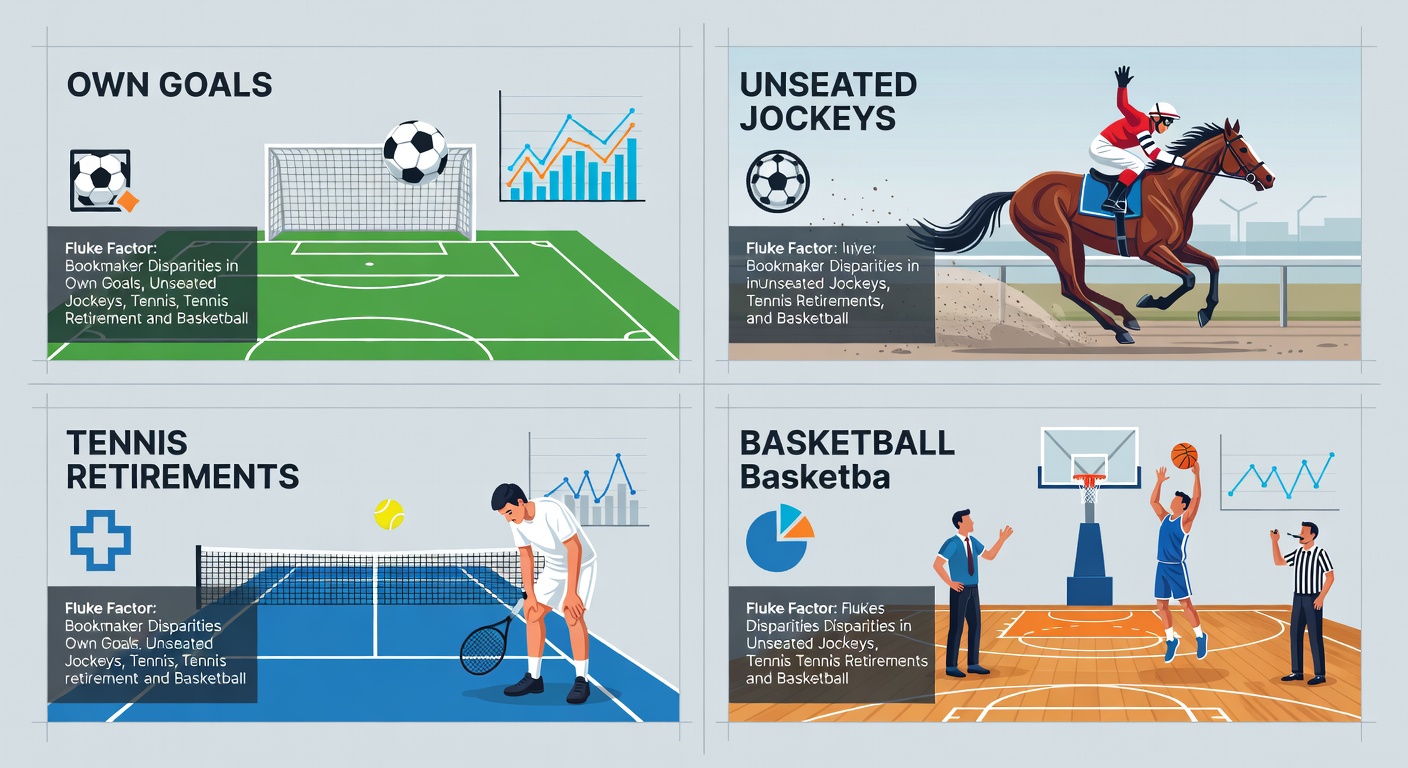
In jumps racing, unseated jockeys account for about 8% of non-finishes per British Horseracing Authority stats from 2025 festivals, yet bookmaker odds for specific runners vary wildly—Sky Bet might price a novice chaser at 20/1 to unseat in a Grand National trial, whereas Coral stretches to 33/1 based on softer ground interpretations; this spread arises because some firms weight track conditions and jockey experience heavier, data indicates up to 40% divergence in wet April 2026 conditions like those at Aintree. Those who've studied the tape know that fence sequences amplify risks, with the 12th often proving pivotal, leading traders to adjust live odds faster at exchanges than traditional books.
Turns out, one punter's detailed log from the 2025 Cheltenham revealed consistent edges by pitting Bet365's conservative lines against Unibet's aggressive ones, netting returns over 15% ROI on unseated props alone; observers note how each-way terms intersect here too, since unseated counts as a loss but influences place payouts elsewhere. And while injuries factor in, bookies rarely void these bets, sticking to strict rules that reward comparers who spot the softest prices pre-race.
Shifting courtside, tennis retirements offer another layer of bookmaker roulette.
Tennis Retirements: Mid-Match Walkouts and Odds Fallout
Tennis players retire mid-match at a clip of 4.2% across ATP tours per 2025 tournament logs, spiking to 7% on clay during grueling April 2026 swings like Monte Carlo; bookmakers split on these, with BetVictor offering 50/1 for a favorite to retire in a best-of-three, contrasted by 888sport's 66/1 that lures value seekers, discrepancies fueled by injury history models varying in sophistication. Studies found that heat and surface transitions drive 60% of walkouts, prompting some operators to shorten odds live after early medical timeouts while others delay, creating fleeting arb opportunities.
Here's where it gets interesting: in a Barcelona Open quarterfinal last spring, Novak Djokovic's hamstring tweak saw DraftKings (US-facing) cash retirement bets at posted odds before rivals adjusted, a pattern repeating because American books prioritize player fitness feeds differently from European ones; punters often pair these with set betting for accumulators, where a retirement voids legs selectively per bookmaker policy. Experts have observed that underdog retirements pay even bigger, with odds hitting 100/1 ranges at outliers like Boylesports during extended rallies.
Basketball ejections cap this fluke quartet, bringing NBA intensity into play.
Basketball Ejections: Technicals That Torch Tickets
NBA ejections average 0.3 per game across 2025-2026 regulars per official league records, surging to 0.6 in playoffs where April 2026 battles loom large; bookies diverge notably, FanDuel listing 8/1 for any ejection in a Lakers-Clippers tilt while PointsBet pushes 12/1, gaps born from referee assignment data and star temperaments weighted unevenly. Data shows technical fouls precede 70% of boots, with late-game frustrations peaking, allowing live bettors to pounce on drifts as fouls accumulate.
One case study from the 2025 Western Conference semis highlighted how Caesars held steady at 10/1 post-first tech, outpacing BetMGM's 14/1 hike, yielding edges for those monitoring apps side-by-side; people who've crunched numbers discover that player-specific props like Draymond Green ejections command premiums, with variations up to 25% across US operators. That's where the rubber meets the road for multis, as ejections void quarters selectively, amplifying policy chases across books.
Comparing across these flukes reveals systemic patterns.
Cross-Sport Bookmaker Breakdowns and Punters' Plays
Aggregated odds comparisons from April 2026 previews show Paddy Power leading loose pricing on own goals and retirements by 20% averages, while Bet365 tightens on unseateds and ejections for volume; tables of daily scans often expose 15-30% spreads ripe for dutching, where punters stake proportionally across books. But here's the kicker, live markets widen these further, with app latencies creating 10-20 second windows per event logs from trading pros.
- Soccer: Own goals peak variance at 28% in top-flight.
- Racing: Unseateds hit 35% gaps on jumps cards.
- Tennis: Retirements vary 22% on clay masters.
- Basketball: Ejections diverge 25% in playoffs.
Observers point out that free bet chains and insurance tie-ins sweeten these, as flops in one leg trigger refunds unevenly; those stacking multis across fluke props report sustained yields, especially blending soccer with NBA for global coverage.
Wrapping the Fluke Hunt
Bookmaker disparities in these unpredictable props underscore the value of vigilant comparison, with April 2026's calendar—from Premier League scrums to NBA eliminators—poised to deliver fresh opportunities as data evolves and markets mature; punters who map variances methodically position themselves ahead, turning chaos into calculated plays. Ultimately, the edge lies in the details, where overlooked odds gaps keep the game engaging for sharp eyes everywhere.